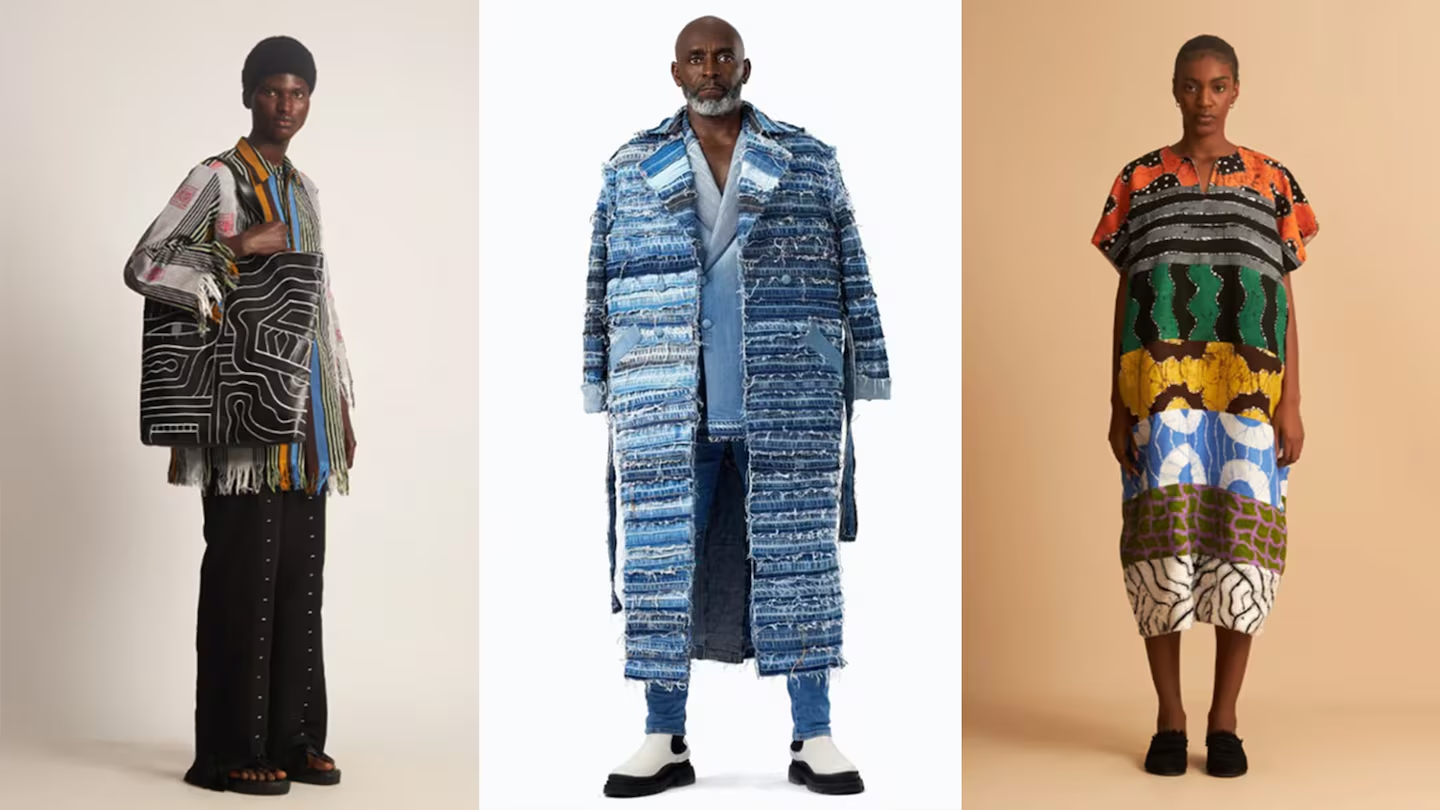
The founder and lead designer at “Holy Nation,” a contemporary African brand, sheds light on why he classifies what the brand makes as “African Essential Wear” and what exactly the genre means:
I recently came across ‘Fashion: A Philosophy’ by Lars Svendsen and let’s just say, it politely
called us out… and then gave us direction.
Because here’s the thing: people love talking about “the future of fashion.”
Meanwhile, it’s 2026. The future has already landed. No theme music or dramatic entrance.
We’re already in it.
Now, according to the experts (the think pieces, and the panels, and the LinkedIn philosophers),
The future of fashion looks something like this:
● AI and virtual reality taking over everything
● Circular and sustainable production models
● Hyper-personalisation
● Ethical practices
● And, interestingly… a growing sense of uniformity
All valid. All important. All… slightly predictable.
But here’s what nobody seems to agree on:
What does fashion actually look like in this future?
Not the systems. Not the supply chains.
The clothes.
And that gap? That’s not a flaw; it’s an opportunity.
Because if no one has defined the visual identity of the future, then the people building today
have the power to shape it.
Now, Svendsen makes an interesting point: fashion, historically, thrives on change for the sake of change.
Novelty is the engine. New for the sake of new.
But what if the real evolution of fashion… is moving away from that?
What if progress looks less like constant reinvention and more like refinement?
Enter: African Essential Wear
This is where African Essential Wear comes in, not as a trend but as a direction.
It’s not just about African-inspired aesthetics (although yes, the silhouettes, techniques, and
cultural references are intentional and rooted).
It’s about redefining what matters in clothing:
● Function over excess
● Utility over noise
● Longevity over hype
A shift from “What’s new?” to “What works?”
And pieces like the Crest Two-Piece for both men and women are not just outfits.
They’re building blocks.
Foundations.
Uniforms for a future that doesn’t need to shout to be seen.
So no, we’re not predicting the future of fashion.
We’re participating in defining it.