In a landmark deal finalised in late November 2025, Ralph Lauren Corporation acquired all rights, trademarks, and goodwill associated with Polo South Africa. The acquisition ends more than four decades of legal disputes and consumer confusion caused by the coexistence of two unrelated “Polo” brands operating in the same market.
Polo South Africa was initially established in 1976 by the local company, LA Grou76. The group registered the “Polo” name and a polo player on horse logo under South African trademark law. When Ralph Lauren first tried to sell its own Polo-branded apparel in South Africa in the late 1970s, legal restrictions prevented it, limiting the U.S. brand’s presence to cosmetics and other non-apparel products.
Over the years, many shoppers were confused between the two brands, with some purchasing Polo South Africa products thinking they were getting Ralph Lauren’s global brand, while others dismissed the local one. Industry insiders referred to this situation as the “two Polos problem.”
With the new acquisition, Ralph Lauren now owns full title to the local brand, including all trademark filings, retail licenses, and associated brand goodwill. The deal was approved by the South African Competition Commission, which imposed conditions to protect public interest and prevent immediate workforce disruption. The LA Group is barred from retrenching any permanent staff involved in the manufacture, distribution, or retail of Polo-branded products related to the acquired assets.
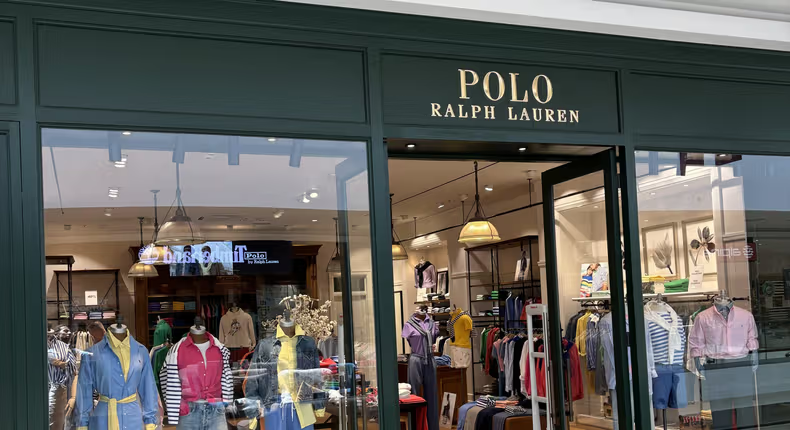


For consumers, the transition promises a unified brand identity under Ralph Lauren’s global luxury portfolio. All Polo clothing sold in South Africa will now carry the internationally recognised emblem, ending long-standing confusion among shoppers.
The acquisition also raises questions about identity, legacy, and local manufacturing. Polo South Africa has long been more than just a brand — it was a South African institution offering locally manufactured apparel at accessible prices. As it shifts under the international umbrella of Ralph Lauren, there is uncertainty around future pricing, local production, and whether loyal customers will embrace the transition. Critics warn that the acquisition risks erasing the legacy of a homegrown label in favour of global branding.
READ MORE: Duro Olowu’s Spring 2026 Line Marries Vintage References with Modern Ease
This move reflects a broader trend in global fashion, with major international brands expanding into African markets through consolidation rather than starting new operations. For Ralph Lauren, the acquisition clears legal obstacles, secures brand consistency, and opens the door to deeper investment and expansion in Southern Africa. For South Africa’s apparel market, it signals a shift toward global standardisation that could reshape consumer expectations, retail pricing, and brand loyalty over time.
As the transition unfolds, all eyes are on how Ralph Lauren will integrate Polo South Africa into its global operations and whether the brand’s local heritage will be preserved or transformed under the global luxury identity.